Explore the Solar System - Teacher pack
Explore the Solar System
English learning edition - November 2026
A 45-minute lesson: observe for 10 minutes, compare for 20 and check learning for 15. Materials: a browser with WebGL, optional projector, ruler, paper and string. No student account is needed.
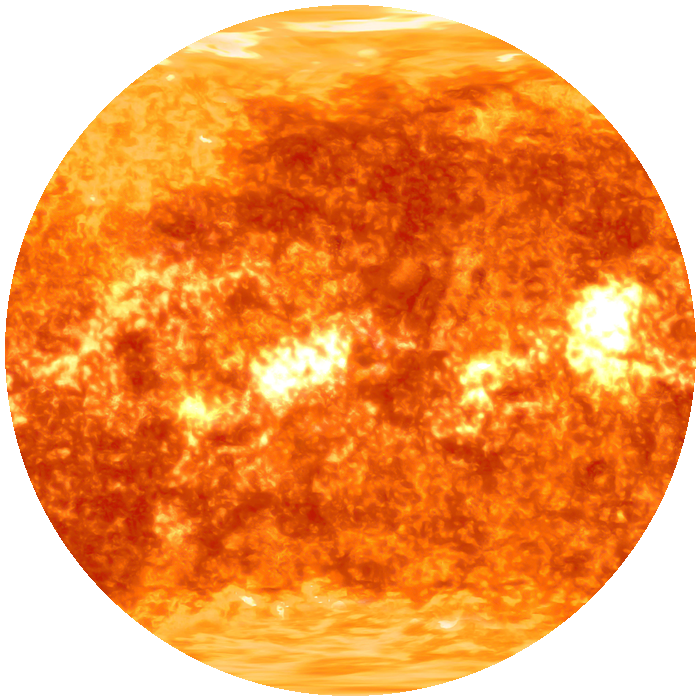
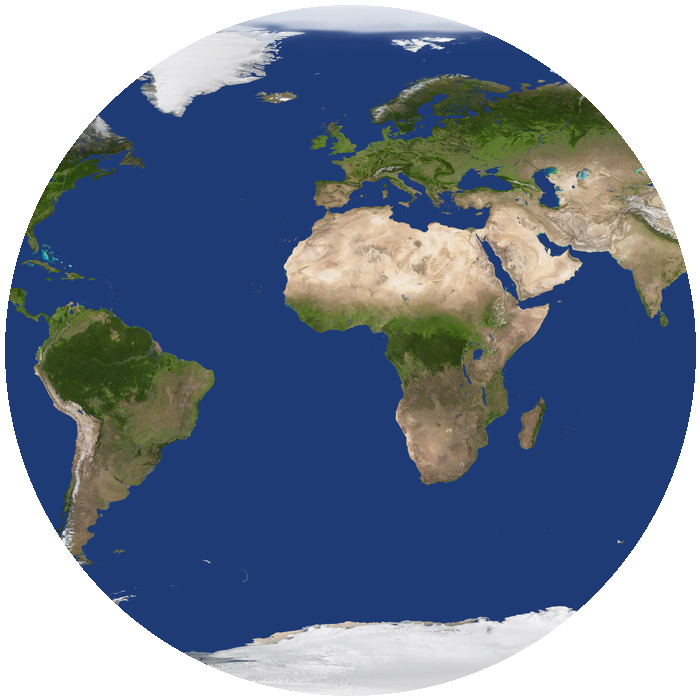
Illustrated globes: Solar System Scope (CC BY 4.0). Schematic rings. https://www.solarsystemscope.com/textures/
Activity 1 | Compare sizes
English learning edition - November 2026
Represent Earth with a 1 cm disc. Draw Mercury at 0.38 cm, Venus at 0.95 cm, Mars at 0.53 cm, Neptune at 3.86 cm, Saturn at 9.14 cm and Jupiter at 10.97 cm. Explain why volume does not increase at the same rate as diameter.
Explain your model
Which disc is the largest? How do you know that all diameters use the same scale? Why does a diameter ratio not give a volume ratio?
Group work
Record your result, a supporting explanation and a question to investigate.
Answer space
Answer space
Answer space
Answer space
Answer space
Answer space
Answer space
Answer space
Answer space
Answer space
Activity 2 | Walk through distances
English learning edition - November 2026
In a space about 40 metres long, place the Sun at zero. One metre represents one AU. Mercury: 0.39 m; Venus: 0.72 m; Earth: 1 m; Mars: 1.52 m; Jupiter: 5.20 m; Saturn: 9.54 m; Uranus: 19.19 m; Neptune: 30.07 m; Pluto: 39.48 m. These are approximate average distances.
Group work
Record your result, a supporting explanation and a question to investigate.
Answer space
Answer space
Answer space
Answer space
Answer space
Answer space
Answer space
Answer space
Answer space
Answer space
Activity 3 | Discuss Pluto
English learning edition - November 2026
Examine the three IAU criteria from 2006: orbit the Sun, be nearly spherical and dominate the orbital neighbourhood. Explain which criterion Pluto does not meet and why scientific classifications can change.
Group work
Record your result, a supporting explanation and a question to investigate.
Answer space
Answer space
Answer space
Answer space
Answer space
Answer space
Answer space
Answer space
Answer space
Answer space
Answers and assessment
English learning edition - November 2026
Jupiter is about 11 Earth diameters across, but roughly 1,300 Earths fit inside its volume. At 1 m = 1 AU, Earth would be about 0.085 mm across, so visible markers are needed. Pluto does not dominate its orbital neighbourhood. Assess order, classification, rotation, orbits, scales and evidence-based explanations.
Scientific table
English learning edition - November 2026
Average distances from the Sun and orbital periods. Figures are rounded.
Body | Average distance | Orbital period |
|---|---|---|
Mercury | 0.39 AU · 57.9 million km | 87.97 days |
Venus | 0.72 AU · 108.2 million km | 224.70 days |
Earth | 1 AU · 149.6 million km | 365.256 days |
Mars | 1.52 AU · 227.9 million km | 686.98 days |
Jupiter | 5.20 AU · 778.5 million km | 11.86 years |
Saturn | 9.54 AU · 1.43 billion km | 29.45 years |
Uranus | 19.19 AU · 2.87 billion km | 84 years |
Neptune | 30.07 AU · 4.50 billion km | 164.8 years |
Pluto | 39.48 AU · 5.9 billion km on average | ≈ 248 years |
Sources and responsible use
English learning edition - November 2026
Main sources: NASA Science, JPL Solar System Dynamics and the International Astronomical Union. Adaptable to ages 9-12 and secondary learners; based on French Cycle 3, not an official UK or US curriculum. The artistic view alters sizes and distances. PDFs may be reproduced free of charge for educational use.
https://science.nasa.gov/solar-system/
https://ssd.jpl.nasa.gov/
https://www.iau.org/
https://systeme-solaire-3d.fr/en/method