SCIENTIFIC FACT SHEET · ROCKY PLANET
Mars
Mars has giant volcanoes, enormous canyons and traces of ancient rivers. Rovers and orbiters investigate conditions that might once have supported microbial life.
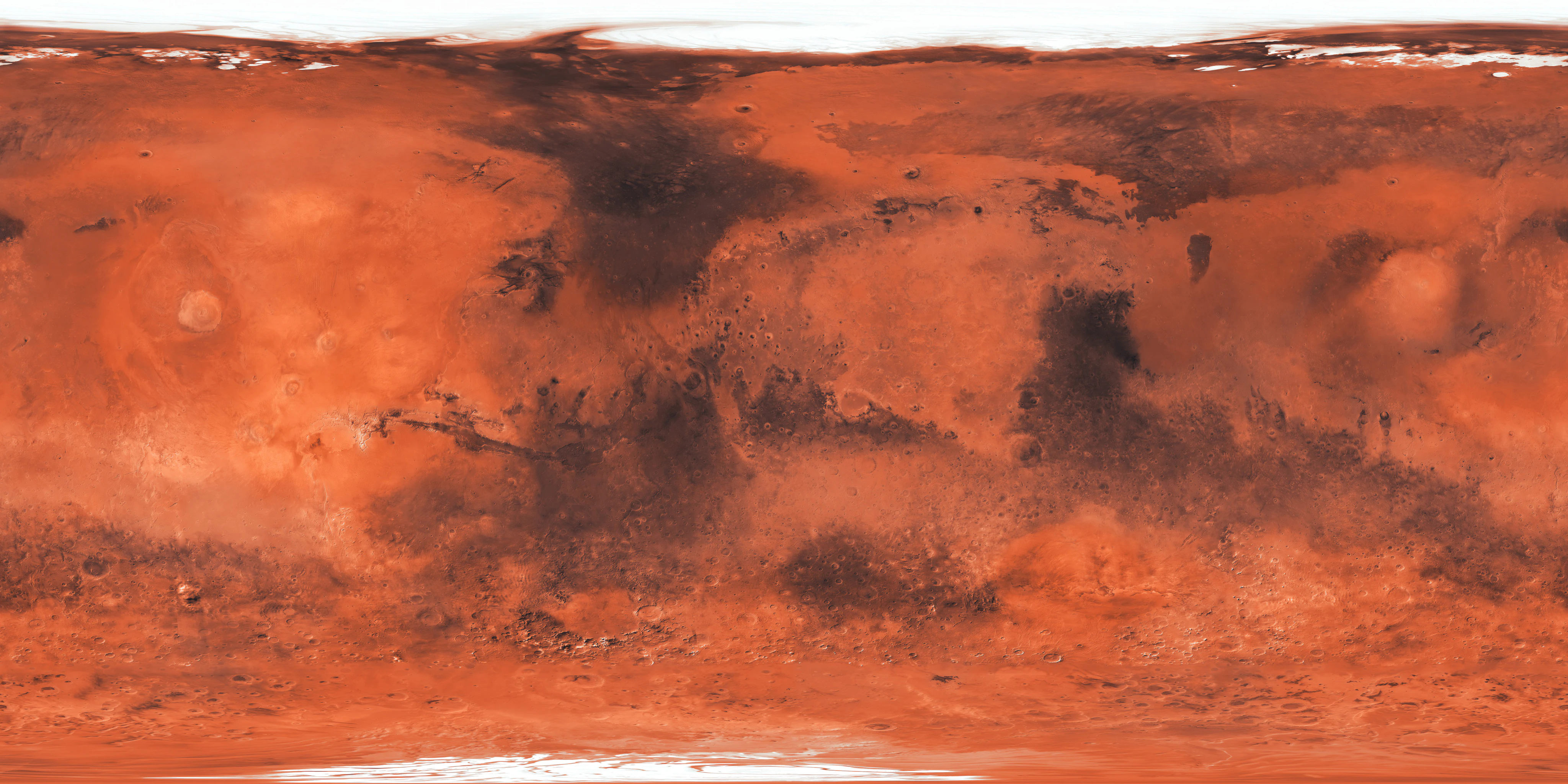
The red frontier
Values are rounded for readability. The figures and 3D representation are explained in the Method section.
Composition and interior
Mars consists of basaltic rocks rich in iron oxides, a silicate mantle and a core containing iron, nickel and sulphur. Iron oxides give its dust a reddish colour.
Atmosphere and environment
Its very thin atmosphere contains about 95% carbon dioxide, with nitrogen and argon. Today's low pressure prevents liquid water from remaining stable on the surface for long.
Exploration
Perseverance has explored Jezero crater and collected samples. Curiosity has studied Gale crater, while several orbiters have mapped the planet, its buried ice and its atmosphere.
A remarkable fact
Olympus Mons rises about 22 kilometres above its surroundings, and Valles Marineris stretches for several thousand kilometres. Mars also bears traces of ancient rivers and lakes.
THE ESSENTIALS
Three things to remember about Mars
- A Martian sidereal day lasts 24 hours 37 minutes.
- Mars once had liquid water on its surface.
- Its two small moons are called Phobos and Deimos.