SCIENTIFIC FACT SHEET · ROCKY PLANET
Mercury
Mercury is the closest planet to the Sun. Its enormous metallic core, cratered surface and extreme temperature contrasts tell an ancient and violent story.
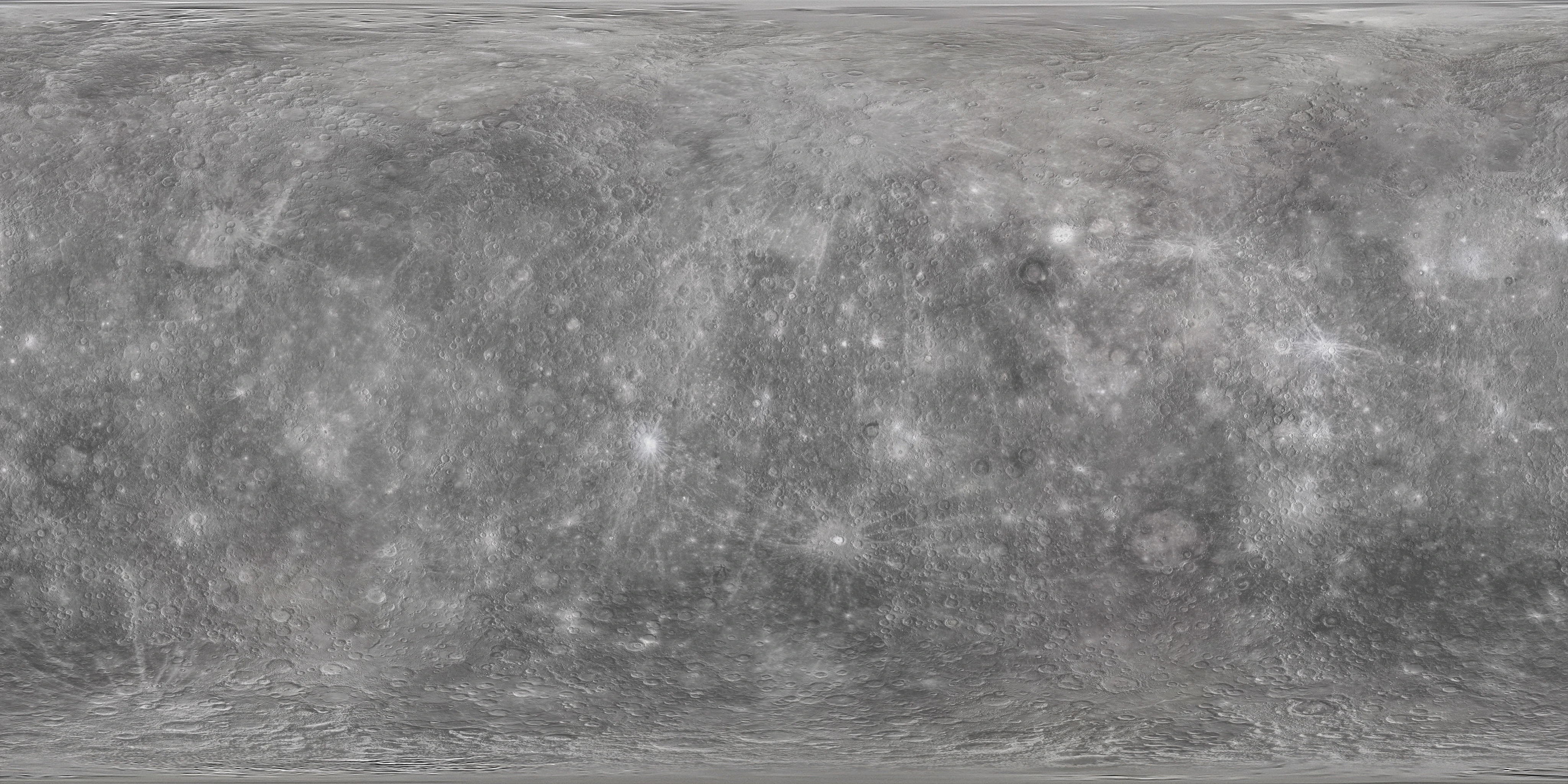
The world of fire and ice
Values are rounded for readability. The figures and 3D representation are explained in the Method section.
Composition and interior
Mercury has a proportionally enormous iron-rich metallic core, surrounded by a relatively thin rocky mantle and crust. Craters and broad plains cover its ancient surface.
Atmosphere and environment
It has an extremely thin exosphere rather than a substantial atmosphere, containing oxygen, sodium, hydrogen, helium and potassium. Temperatures therefore vary greatly between day and night.
Exploration
Mariner 10 was the first spacecraft to fly past Mercury. MESSENGER later mapped the whole planet. The European–Japanese BepiColombo mission is now in its arrival phase and is due to enter orbit in November 2026 to study Mercury’s surface, interior and magnetic field.
A remarkable fact
Water ice can survive in permanently shadowed polar craters, despite Mercury's closeness to the Sun.
THE ESSENTIALS
Three things to remember about Mercury
- A year on Mercury lasts about 88 Earth days.
- It has the greatest day-to-night temperature differences of any planet.
- It has no moons.