SCIENTIFIC FACT SHEET · DWARF PLANET
Pluto
Pluto is a world of ice mountains, nitrogen plains and glaciers in the Kuiper Belt. Classified as a dwarf planet by the International Astronomical Union in 2006, it remains one of the most fascinating objects explored by New Horizons.
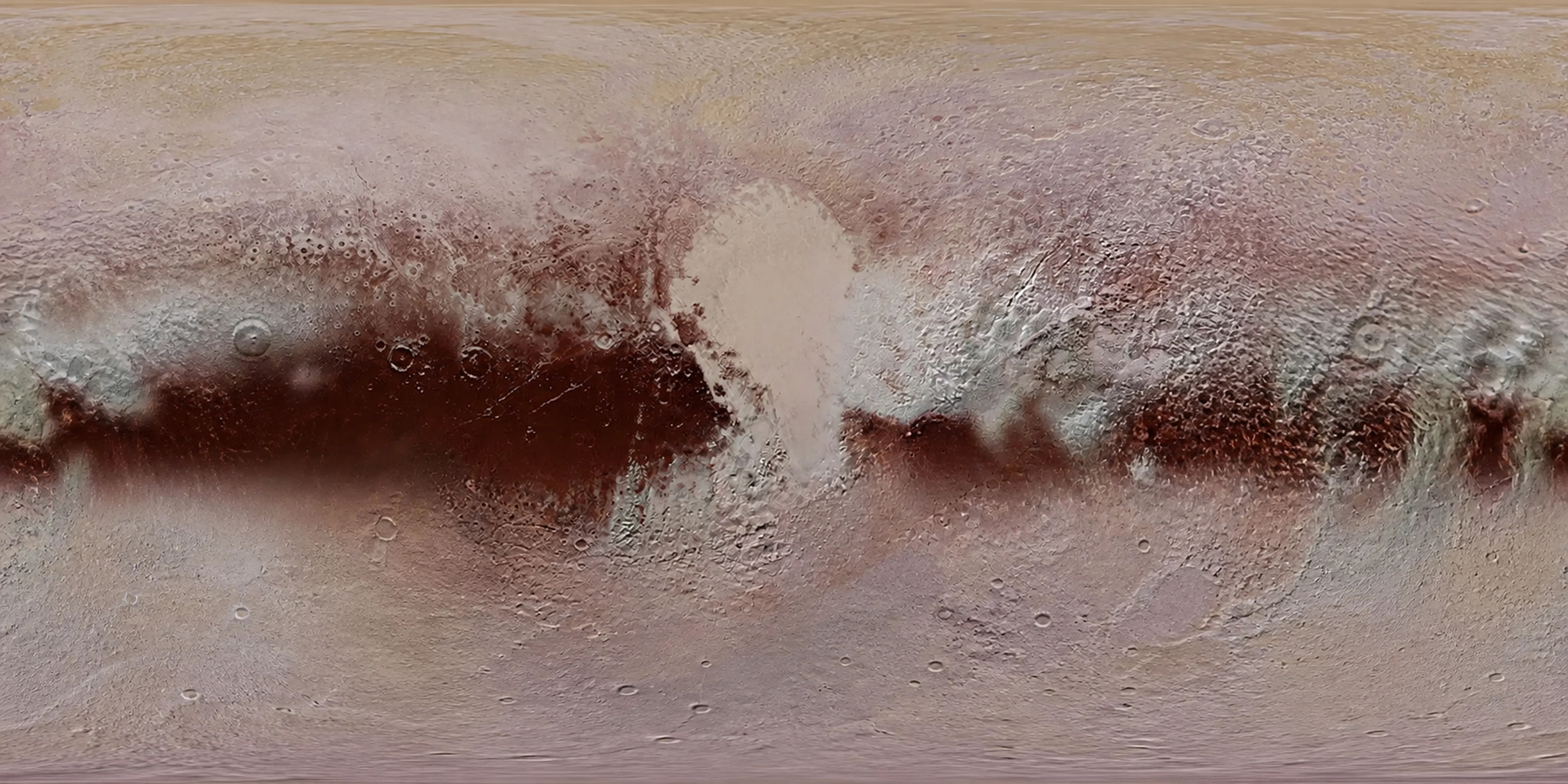
The world with an icy heart
Values are rounded for readability. The figures and 3D representation are explained in the Method section.
Composition and interior
Pluto is thought to have a rocky core surrounded by a water-ice mantle. Its surface includes frozen nitrogen, methane and carbon monoxide.
Atmosphere and environment
Pluto has a very thin atmosphere of nitrogen, methane and carbon monoxide. Some of these gases can freeze onto the surface as the dwarf planet moves farther from the Sun.
Exploration
New Horizons flew past Pluto in July 2015, revealing a world far more active and varied than expected: ice mountains, glaciers, atmospheric hazes and vast plains.
A remarkable fact
Sputnik Planitia forms the left part of the famous heart-shaped region. It contains moving ice and very few large craters, indicating a geologically young surface.
THE ESSENTIALS
Three things to remember about Pluto
- Pluto has been classified as a dwarf planet since 2006.
- It belongs to the Kuiper Belt.
- Charon is its largest moon.