SCIENTIFIC FACT SHEET · G2 V STAR
Sun
The Sun contains almost all the Solar System's mass. In its core, hydrogen fusion releases the energy that lights and warms the worlds around it.
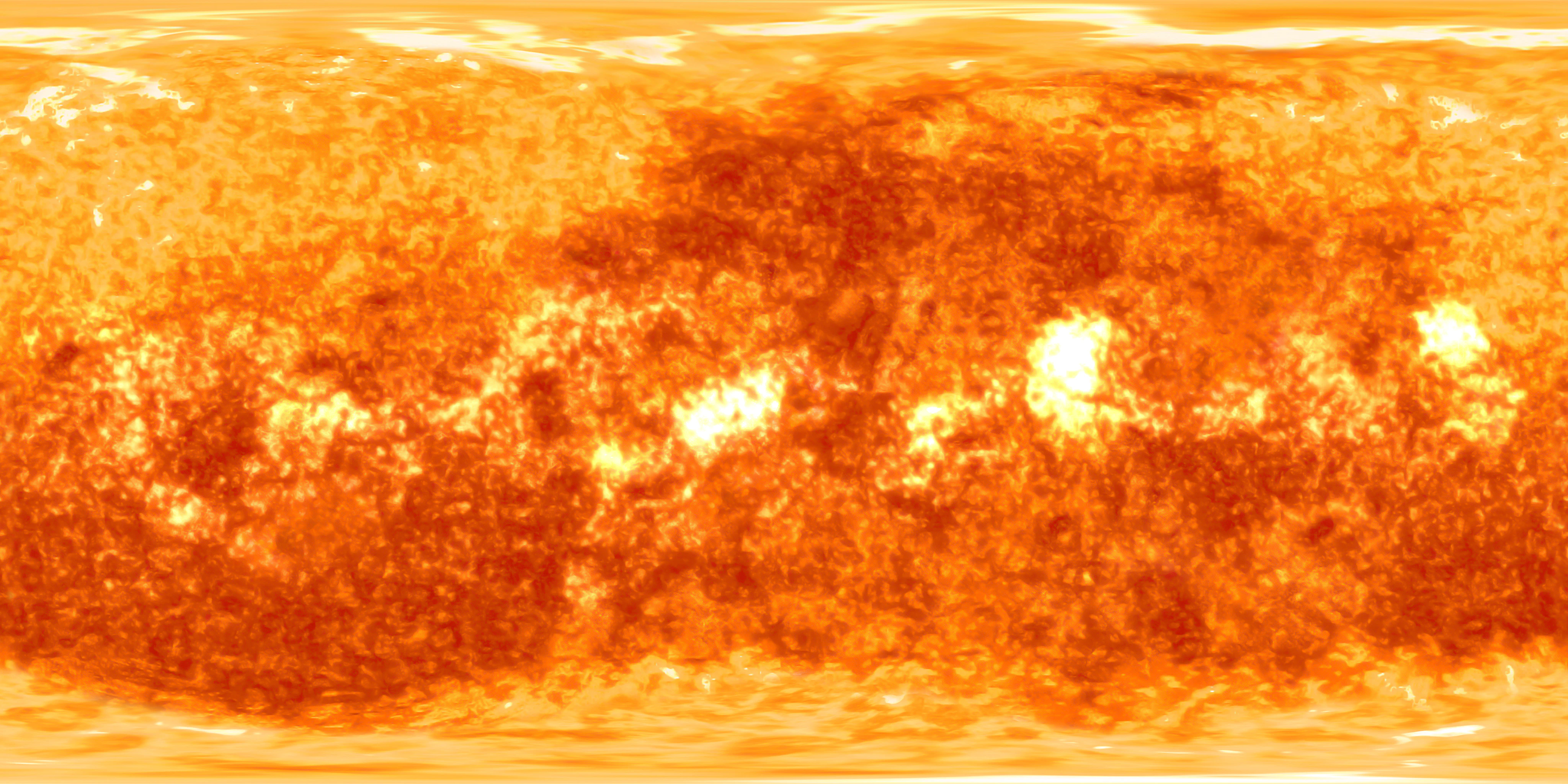
The glowing heart of our system
Values are rounded for readability. The figures and 3D representation are explained in the Method section.
Composition and interior
The Sun is about 73% hydrogen and 25% helium by mass, with small amounts of oxygen, carbon, neon and iron. In its core, temperature and pressure allow hydrogen to fuse into helium.
Atmosphere and environment
The photosphere is the visible surface. Above it lie the chromosphere and the much hotter, extensive corona. The solar wind carries charged particles and shapes the heliosphere, a bubble surrounding the planets.
Exploration
Parker Solar Probe passes through the corona to measure particles and magnetic fields close to the Sun. Solar Orbiter observes its polar regions and the origins of the solar wind.
A remarkable fact
The Sun is not solid: its plasma rotates faster at the equator, taking about 25 days, than at the poles, where a rotation takes nearly 35 days. This is called differential rotation.
THE ESSENTIALS
Three things to remember about Sun
- It contains about 99.8% of the Solar System's mass.
- Nuclear fusion is the source of its energy.
- Its light takes about 8 minutes 20 seconds to reach Earth.