SCIENTIFIC FACT SHEET · ROCKY PLANET
Venus
Beneath its sulphuric acid clouds, Venus hides a rocky world with an extreme greenhouse effect. Its slow, retrograde rotation makes it one of the most unusual planets.
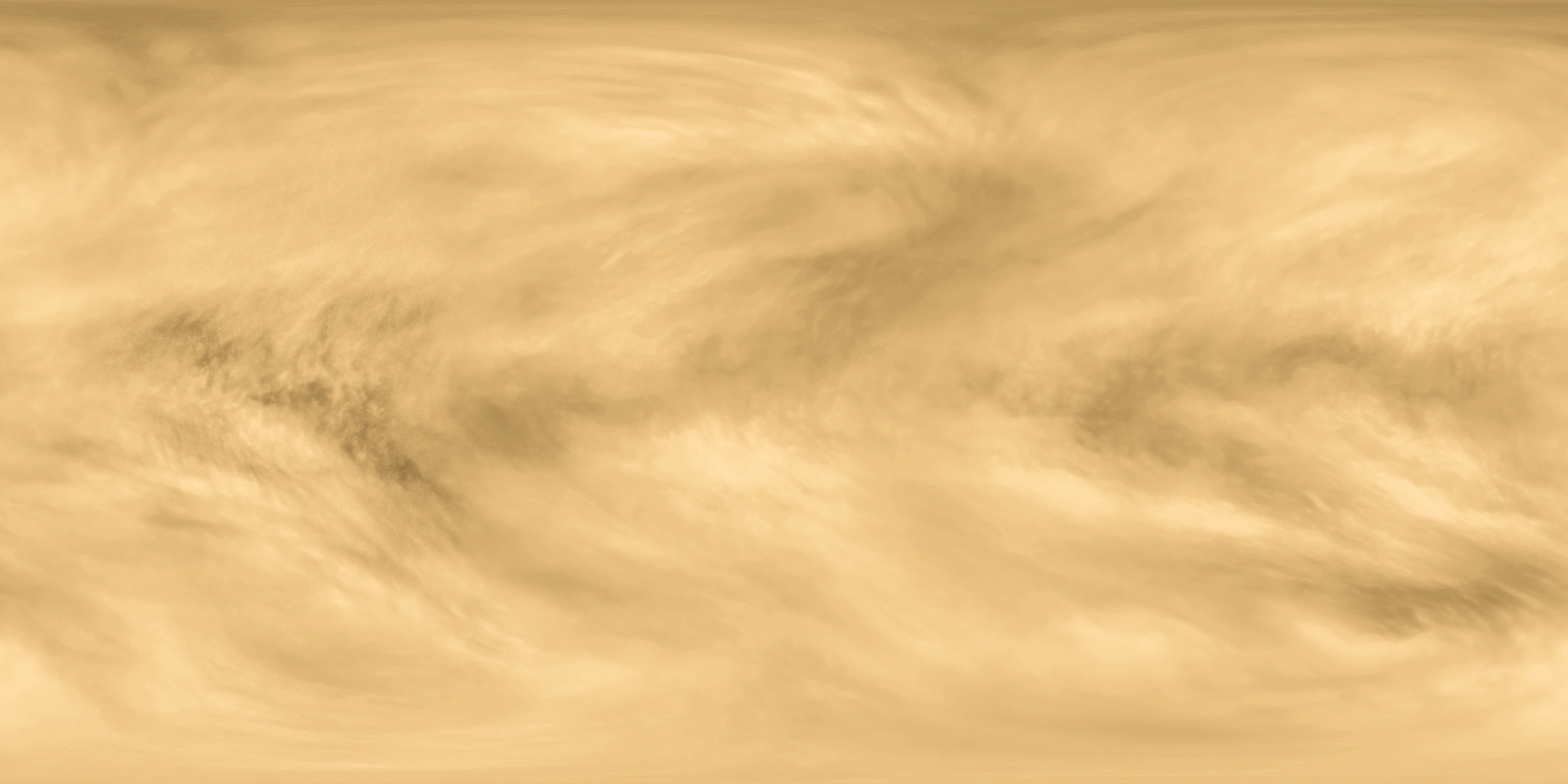
The planet of acid clouds
Values are rounded for readability. The figures and 3D representation are explained in the Method section.
Composition and interior
Venus is a rocky planet similar in size to Earth. It probably has a crust, a silicate mantle and a metallic core. Many volcanoes and lava plains mark its surface.
Atmosphere and environment
Its atmosphere contains about 96.5% carbon dioxide, nitrogen and sulphuric acid clouds. Surface pressure is nearly 92 times Earth's, and the greenhouse effect keeps temperatures near 465 °C.
Exploration
The Soviet Venera probes sent back the first images from the surface. Magellan mapped the terrain with radar. DAVINCI, VERITAS and EnVision are planned to investigate the history of its atmosphere and geology.
A remarkable fact
Venus rotates very slowly and in a retrograde direction. A Venusian sidereal day lasts longer than its year around the Sun.
THE ESSENTIALS
Three things to remember about Venus
- Venus is the hottest planet.
- Carbon dioxide dominates its atmosphere.
- It has no moons.